
The Power of Voice AI: Streamlining 24/7 Inbound Customer Support
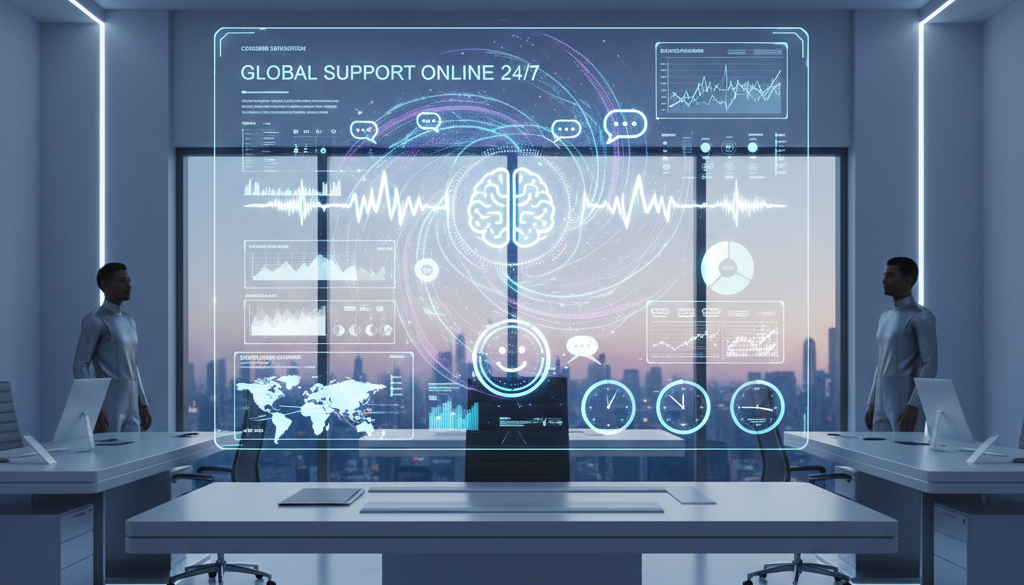
In today's global market, customers expect instant access to support, regardless of the time zone or day of the week. This always-on expectation poses a significant logistical and financial challenge for companies relying solely on human agents. The solution lies in voice automation AI, a sophisticated technology that takes over routine, high-volume inbound queries, ensuring that every call is answered instantly and resolved efficiently, 24 hours a day, seven days a week.
Voice automation AI systems utilize advanced natural language processing (NLP) and machine learning to understand customer intent, provide accurate information, and route complex issues to the correct human agents, fundamentally changing how customer service centers operate.
1. The Challenges of Handling Inbound Customer Support 24/7 Without Assistance
Operating a fully human-staffed contact center around the clock demands immense resources and often leads to burnout and inconsistent service quality. The difficulties inherent in traditional 24/7 support models include:
High Operational Costs: Staffing night shifts and weekends requires premium pay and extensive management oversight, severely increasing overhead.
Staffing Inconsistency: Recruiting, training, and retaining agents for non-traditional hours is difficult, leading to high turnover and service variability.
Long Wait Times: During peak periods or unexpected surges in demand, queues quickly build up, resulting in customer frustration and abandonment rates.
Agent Fatigue and Burnout: Human agents dealing with repetitive, high-volume inquiries frequently experience fatigue, which negatively impacts complex issue resolution and overall customer satisfaction.
Scalability Limitations: Expanding human support operations quickly to meet seasonal or sudden business growth is slow and expensive, hindering agility.
2. Step-by-step: How Voice Automation AI Streamlines Inbound Customer Support 24/7
Voice AI systems do not simply replace Interactive Voice Response (IVR) menus; they interact conversationally and intelligently with customers. Here is how they streamline the support process:
A. Instant Acknowledgment and Triage
The moment a call is received, the AI system answers immediately. It bypasses hold music and complex menus, instead engaging the caller directly by asking open-ended questions like, 'How can I help you today?'
B. Natural Language Understanding (NLU) for Intent
Using NLU, the system analyzes the caller's speech to accurately determine their intent (e.g., 'check order status,' 'reset password,' or 'report an outage'). This precision prevents misrouting, a common failure point of traditional systems.
C. Automated Resolution and Self-Service
For approximately 60-80% of inbound inquiries that are routine or transactional, the AI can provide a complete resolution without human intervention. This includes processing refunds, updating personal information, confirming operating hours, or providing troubleshooting steps. According to research published in the MIT Sloan Management Review, organizations that leverage conversational AI effectively see significant improvements in customer resolution times.
D. Seamless Agent Hand-off
If the query is too complex, requires empathy, or falls outside the AI's defined capabilities, the system collects all relevant context and smoothly transfers the call to a specialized human agent. This means the human agent starts the conversation already informed, drastically reducing the need for the customer to repeat information.
3. Tools Typically Used in Voice Automation for Support
Implementing high-level 24/7 voice automation requires a stack of specialized technologies that work together to create a human-like conversational experience:
Speech-to-Text (STT) and Text-to-Speech (TTS) Engines: These core technologies convert spoken words into data the machine can process and then convert the machine's response back into natural-sounding speech.
Natural Language Processing (NLP) Platforms: These systems interpret the meaning, context, and sentiment of the customer's input, enabling sophisticated dialogue management.
Generative AI Models: Increasingly, advanced models are used to handle complex, non-scripted conversations, providing more flexible and human-sounding responses than older, rigid systems.
Cloud Contact Center as a Service (CCaaS): Modern AI deployments are typically integrated within cloud-based platforms that provide unified management of voice, chat, and agent desktop tools.
The widespread adoption of these tools reflects a market shift. A report by Statista indicates continuous strong growth in the global conversational AI market, underscoring its necessity for modern customer operations.
4. Cost Comparison: Automated Support vs. Traditional In-House Staffing
While the initial setup of voice automation AI requires an investment, the long-term operational savings and enhanced scalability are significant, particularly when compared to maintaining a large, in-house, 24/7 human team.
By offloading routine tasks to AI, human agents can focus on high-value interactions that require nuanced judgment or deep expertise. This hybrid approach ensures that while AI handles the volume, complex service areas continue to thrive with human support. For instance, tasks requiring specific industry coordination, such as those discussed in our article, [Real Estate Virtual Assistants Coordinating Showings](https://www.glidexoutsourcing.com/blog/real-estate-virtual-assistants-coordinating-showings), remain essential areas for skilled human professionals.
5. Why GlideX Outsourcing is the Best Solution for Implementing Voice Automation AI
Implementing voice automation AI successfully is more than just purchasing software; it requires specialized expertise in conversational design, integration, and continuous optimization. GlideX Outsourcing offers a strategic partnership that maximizes the benefits of AI while maintaining high-touch human support.
Strategic Deployment: We do not offer a one-size-fits-all solution. Our experts analyze your existing call data to design and train an AI voice model that precisely matches your company's tone and addresses your most frequent customer needs.
Optimized Hybrid Models: GlideX specializes in the blend of AI and human support. Our outsourced agents are specifically trained to take over seamlessly when the AI needs to escalate a complex case, guaranteeing smooth transitions and superior customer experiences.
Cost Efficiency and Speed: We manage the entire infrastructure setup, accelerating deployment and ensuring the AI is integrated correctly with your existing CRM and internal systems, saving you the expense and time of building internal AI expertise from scratch.
Continuous Improvement: Voice AI must learn. We monitor the system 24/7, refining the NLU models based on real-time call feedback to ensure increasing accuracy and resolution rates over time, guaranteeing that your 24/7 support improves consistently.
Transmission Complete
Was this protocol useful?